
Maps of Istanbul
The transport network, the Grand Bazaar and how the city fits together.
Istanbul is easier to read once you accept that it is three cities: the old peninsula, the modern European side across the Golden Horn, and Asia across the Bosphorus. Almost everything a first visitor wants is in the first two, and the ferry between them costs less than a coffee.
Where Istanbul sits
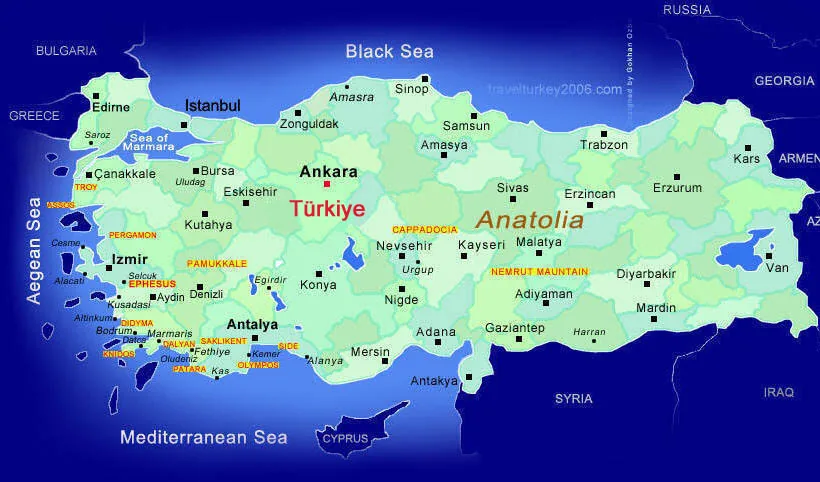
Istanbul is in the far northwest corner of the country, on the Sea of Marmara, with Europe on one bank and Asia on the other. Ankara, the capital, sits in the middle of Anatolia. Most of what people picture when they think of Turkey is somewhere else on this map: Ephesus and Pamukkale down the Aegean side, Cappadocia in the centre, and the southeast around Gaziantep and Antakya, which is where our longer trips go.
The tram and metro network
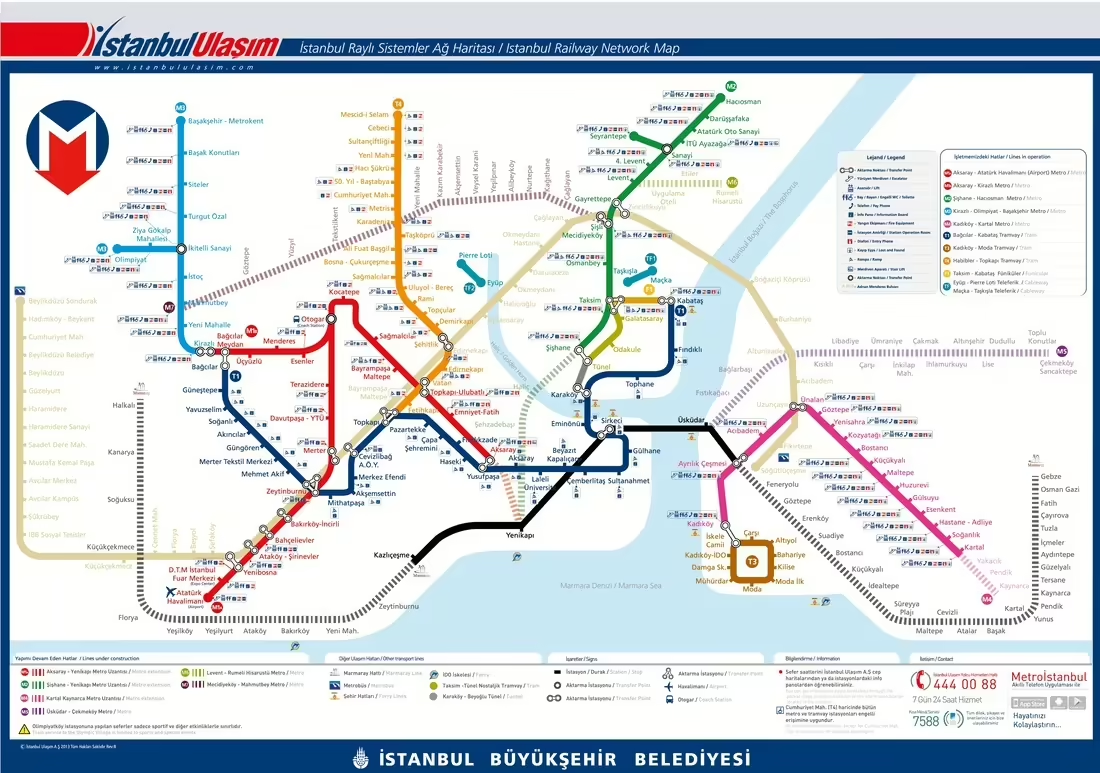
The official network maps are published by Metro Istanbul and are updated whenever a line opens. The T1 tram is the one most visitors use: it runs from Kabataş through Karaköy, over the Galata Bridge and along the spine of the old city past the Grand Bazaar, Hagia Sophia and the Blue Mosque.
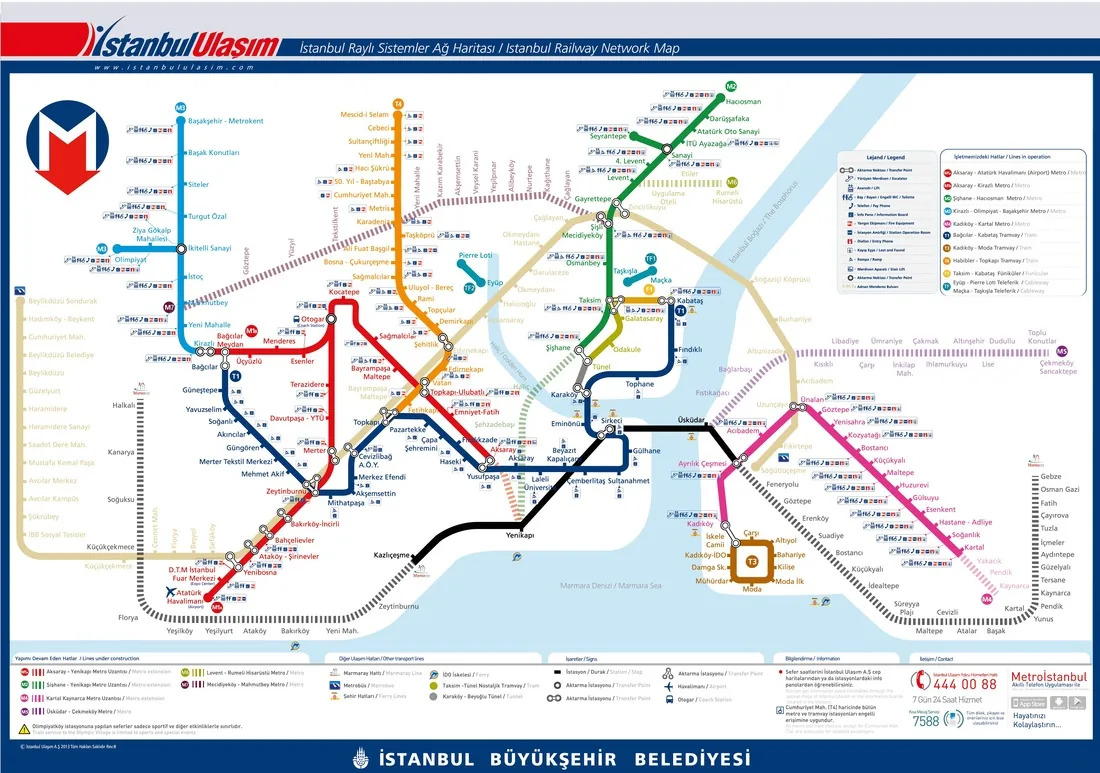
Find the Bosphorus running down the middle and the rest falls into place. The T1 tram crosses the Golden Horn and carries the whole of the old city. The M2 metro climbs the modern European side through Şişhane and Taksim towards Levent. The M4 does the same job on the Asian side, out of Kadıköy.
Ferries
Şehir Hatları runs the commuter ferries. The Eminönü to Kadıköy crossing takes twenty minutes, costs a couple of lira on an Istanbulkart, and gives you the skyline that appears on every postcard.
The Grand Bazaar
Four thousand shops and sixty-one streets under one roof. There is no useful way to memorise it. Pick a gate, note its name, and if you get lost ask for that gate by name. Our guides walk it without a map, which is most of the point of coming with one.
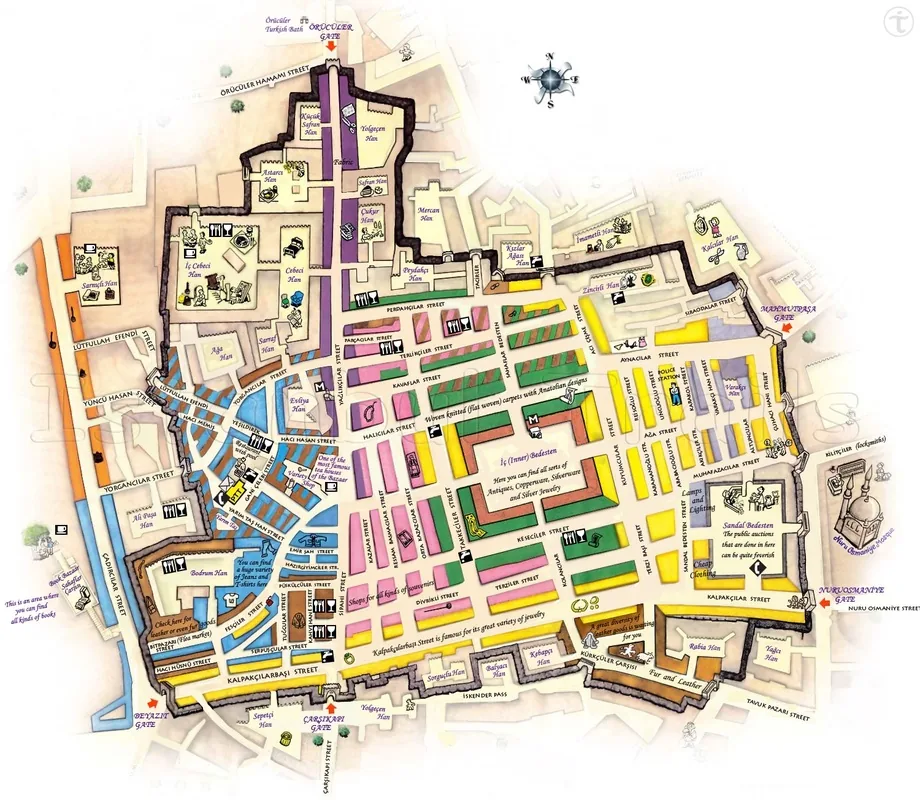
The gates are marked around the edge, and they are how you navigate. Beyazıt Gate opens onto the university square at the west end and Nuruosmaniye Gate onto its mosque at the east, with Kalpakçılarbaşı Street running between the two and lined with jewellers. The covered hall in the middle is the İç Bedesten, where the antiques and the silver are.
Before you ask